When Regulated Gold Alloys Started
From the earliest attempts at regulation in 1238 by Henry III, to the sophisticated system we know today, the history of gold alloys and hallmarking is a fascinating journey. Here are key milestones:
13th to 15th Century: The Foundation Years
In 1300, Edward I established the maker’s mark and required the leopard’s head mark for silver. The gold standard was lowered to 18 carats in 1478.
16th Century: Rising Standards
1544 saw the introduction of the lion passant guardant as part of the hallmark. The gold standard was raised to 22 carats in 1576.
17th and 18th Centuries: Expansion and Regulation
In 1697, the standard for plate was raised to 95.84% pure silver. By 1757, assay offices were established in Birmingham and Sheffield. The sovereign’s head or ‘duty mark’ was introduced in 1773.
19th Century: Introduction of New Standards
1822 saw the reintroduction of 18 carat gold. In 1854, 9, 12, and 15 carat gold were introduced. Gold wedding rings became liable for hallmarking in 1867.
20th Century: Modernisation and Diversification
The 15 and 12 carat standards for gold were cancelled in 1932, replaced with one of 14 carats. With the 1973 consolidation of all existing hallmarking statutes into a single Act, marks for platinum were introduced in 1975.
what country created the carat for gold?
The carat, as a measure of gold purity, has roots in ancient Greece and Rome, but its specific development as a system for expressing gold alloy proportions is linked to medieval German coinage. The German “mark” coin, weighing 24 carats, was the first known instance of using carats to denote the proportion of gold in an alloy.
Here’s a more detailed explanation:
- Ancient Greek and Roman Origins:The word “carat” itself comes from the Greek “keration,” referring to the carob seed, which was used as a standard weight for small quantities in ancient times.
- Medieval German Coinage:The German “mark” coin, standardized at 24 carats, was a key development in establishing the carat system for gold purity. Because pure gold is too soft for coinage, other metals were added, and the proportion of pure gold was expressed in carats (e.g., 18-carat gold means 18 parts gold and 6 parts other metal).
- Global Standardization:While the carat system originated in Europe, it was later formalized with international standards. The modern carat, as a unit of weight (200 milligrams), was established at the General Conference of the Metric Convention in 1907.
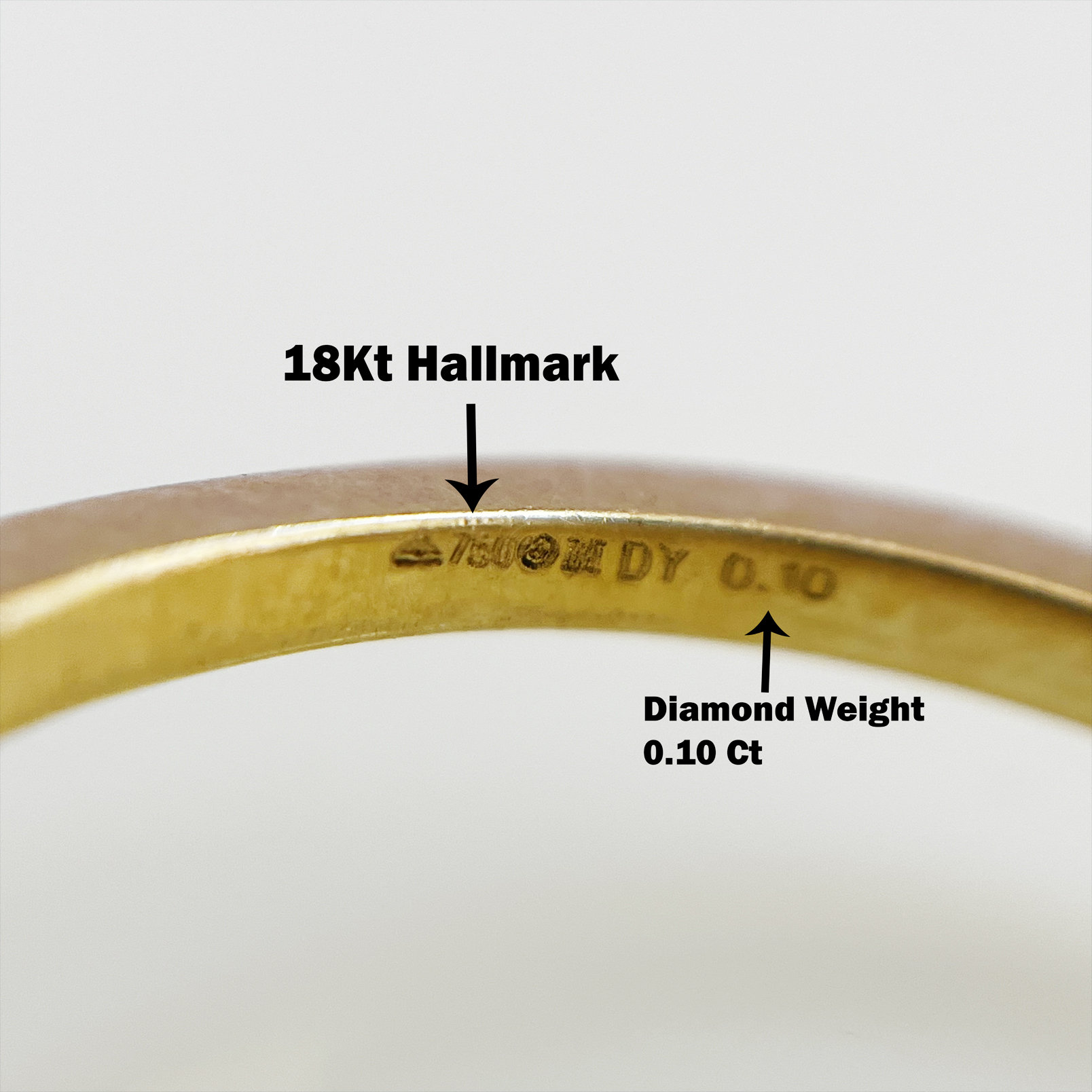
Examples of Hallmark Stamps